Pine is a wonderful quirk of a game, that might have bitten off a bit more than it could chew.
The Game:
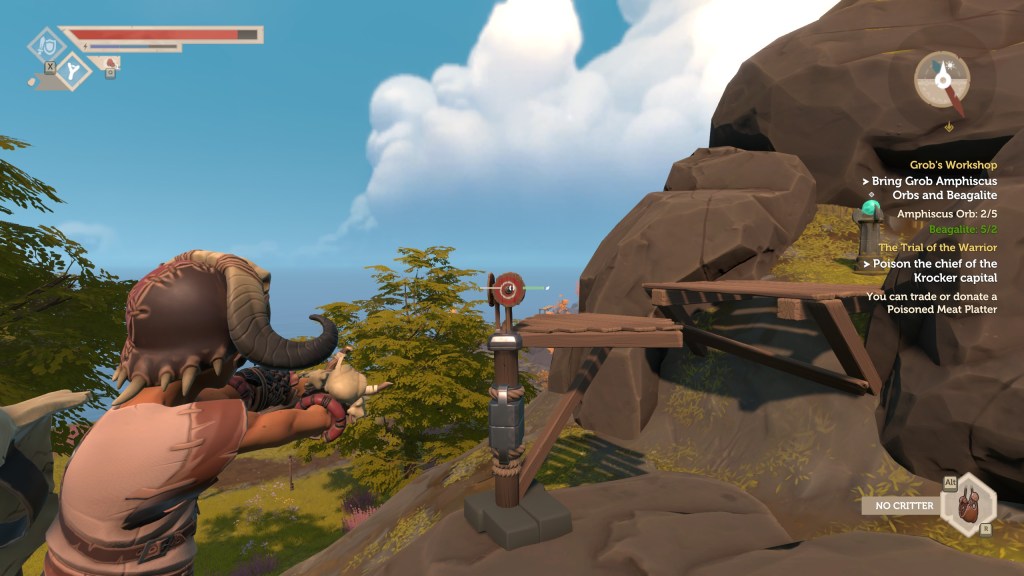
Pine is an open-world crafting and action / puzzle game in the same vein of Zelda. The game will see players completing jumping puzzles, shooting targets with their slingshot, later bow, and engaging in combat with foes as they run through the main story of of the game.
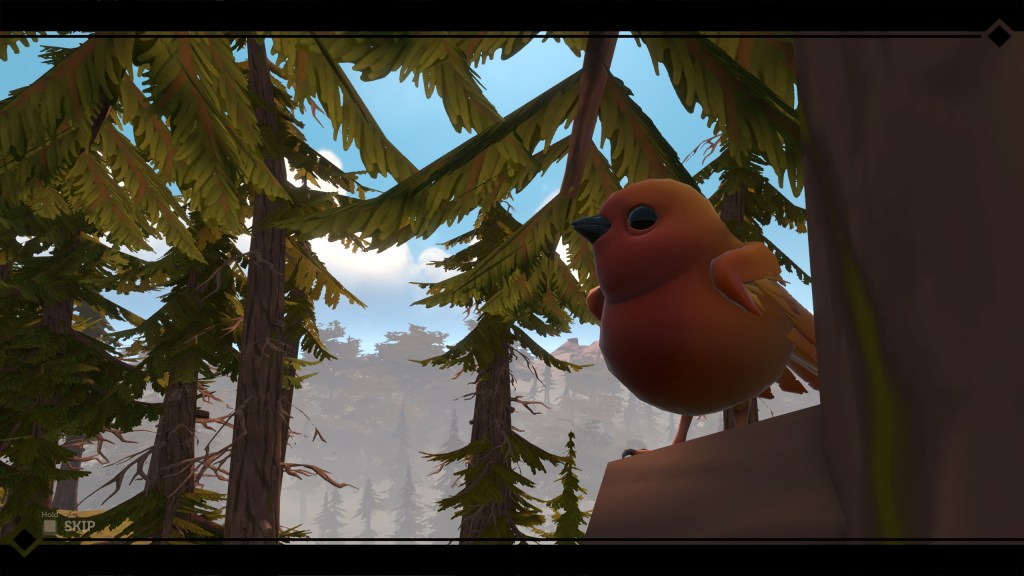
Players will inhabit the character of Hue, a young human man from a village up upon the cliffs. Him and his people have ‘always’ lived on the cliffs, and the rest of the island they reside upon is considered to be a strange and dangerous place. Well, as these stories often go, disaster strikes and Hue is compelled to venture into the world outside. Will he save his people? What monsters await him? Only one way to find out!
The Good:
Pine oozes charm. Everything from the quirky and fun creatures that inhabit the island alongside Hue, to the superbly crafted ambient soundtrack and stylized graphics of the game make for a great world to explore.
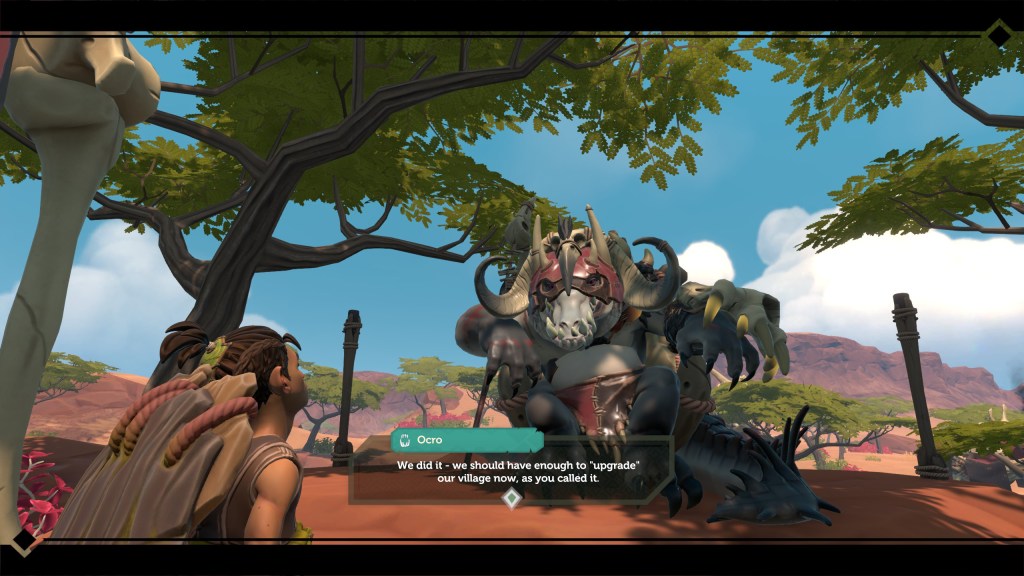
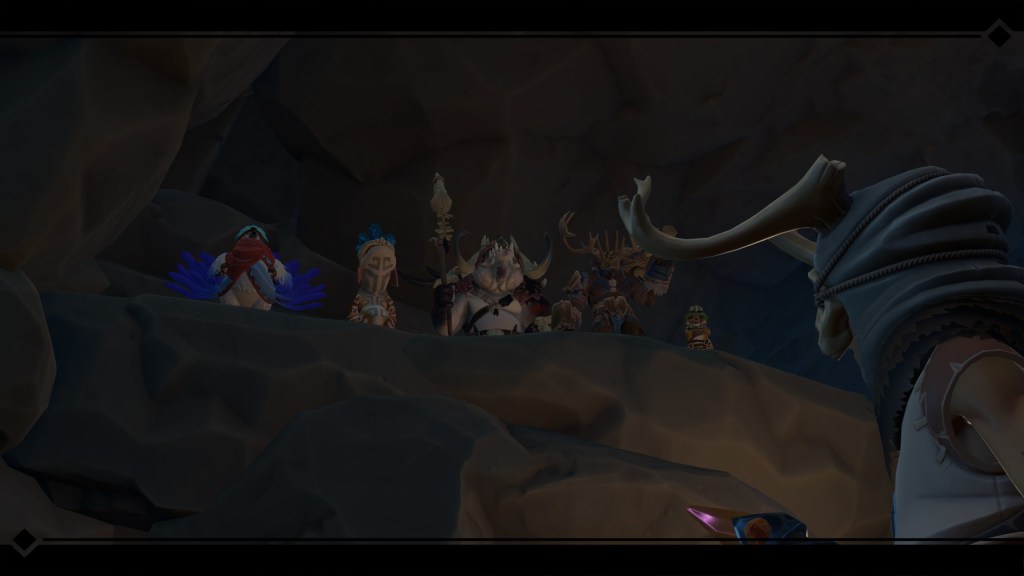
Hue’s tribe of humans are the only of their kind on the island. The rest of the peoples are hybrid animal-men, including Alligator warriors, Turkey Scholars, Frog Scavengers, Moose Sages, and cunning Fox Inventors. It’s not new, and nothing here really smacked of innovation, but we enjoyed the depictions of these creatures regardless. They fit the world well, and each race had unique combat styles and animations to go along with them.

Digging into the nitty-gritty, Pine has a lot to offer besides its world and creatures. There are tons of items and equipment to find / craft, a full set of gear per-race even, and a plethora of collectable items to happen across.
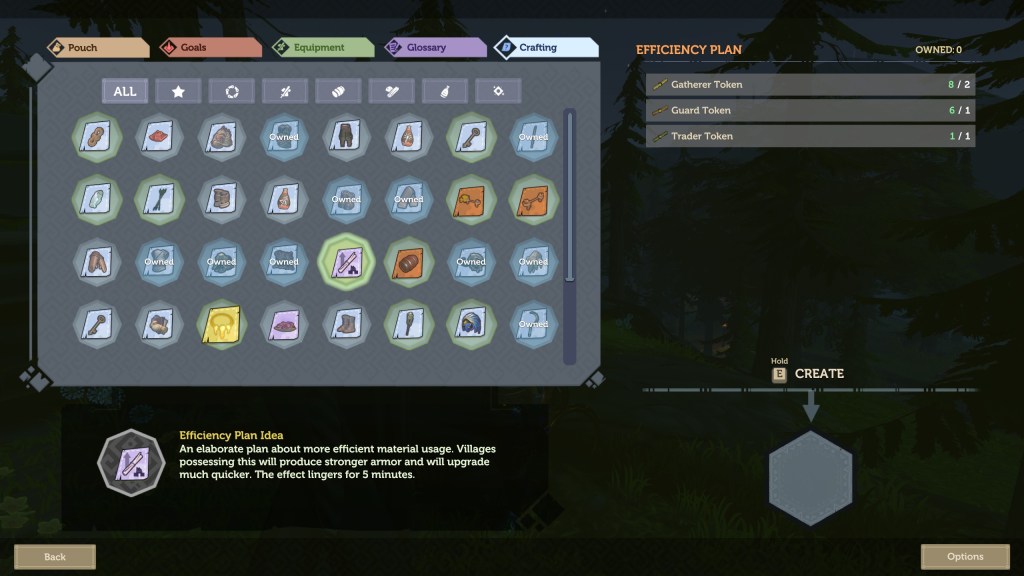
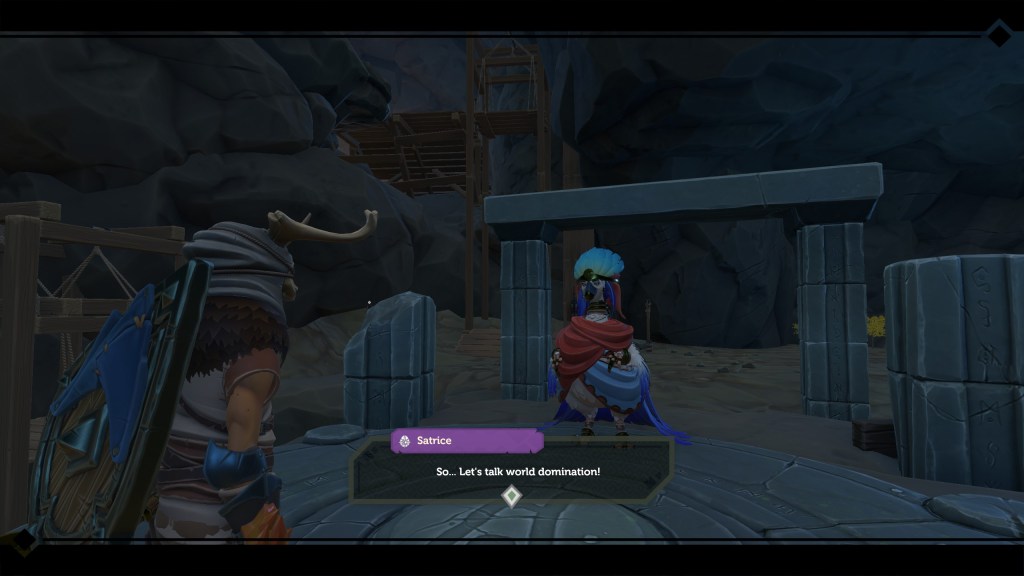
What Pine does best though is its tribal faction system. Each tribe acts and moves across the world independent of the player’s input. Wars will break out, villages will rise, and fall, and trade routes will form. Players will constantly find the world around them shifting. A town you traded with might be gone in an hour, doubled in size, or even having been conquered by another race.
Not only that, but the player can effect faction changes and town shifts with a variety of trade items that can buff or debuff entire villages and cities if they so wish. Have a race that is out for your blood and in your way? Craft a nice big feast for them of poisoned meats, effectively halving their warriors health and drastically decreasing their fighting capabilities. Go one step further and call in a raid on that town if you want, summoning an allied tribe to strike when your foes are weakened. It makes for a dynamic play session every time, and left us with a sense of having impacted the world in very real ways through our manipulations of it.
The Mixed:
Camera angles and combat is very middle of the road, often brushing against the bad here. Jumping puzzles were usually not difficult due to the jumps themselves, but rather the sudden camera shifts that came with them mid-jump, or how the player character would often move just past or short of where you would want him to stand. We’ve seen worse in a lot of games, but with some extra polish time Pine could have made their controls a lot better.
Where combat is concerned, it’s a bit buggy, with player movements clipping through enemies when they should have hit, and vice-versa, and worst of all, it’s repetitive. Once you get fighting down there are no surprises. By the end of the game my battles usually went like this; charge strong attack, wait until opponent lowered guard to strike, attack first and and follow through with combo, rinse and repeat. Fighting more than one enemy at once greatly increases the fun and difficulty factor though, as enemies are aggressive in their fighting style and would often chain attacks with one another or attack when we were knocked prone.

The Bad:
Story falls far short of the rest of what we get in Pine. It kept me moving through the game, true, but the entire main tale came off more as a glorified tutorial than an actual campaign of any sort. The entire plot of this game could be written down in a few sentences if need be, and told in just a little bit more. It’s threadbare, the ‘twist’ involved is so obvious that even the game makes fun of it, and what is present is often is dry, unfunny when it’s trying to be, and just plain non-nonsensical. Sadly, it feels a lot like no one much thought of the story when they made this game. Hell, the game even has an ‘Island Stories’ section of the player’s quest log only to end up having two said stories in total during our play through, both of which had little to no narration and story wise added nothing to the game.
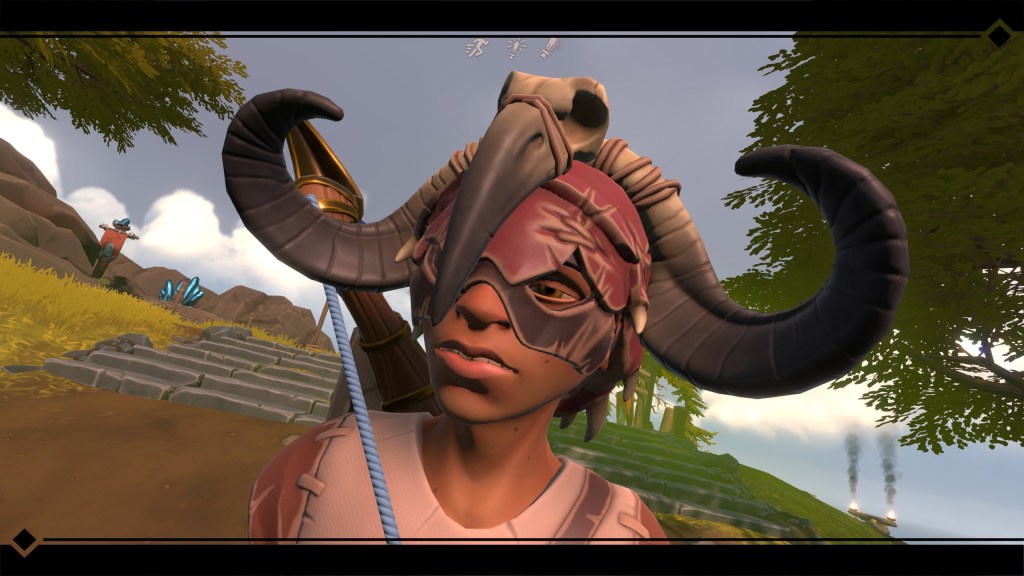
And then we come to the Human character models . . . let’s just say that it’s clear where the art team’s priorities were when working on this game. Humans in Pine are downright weird looking, the player character Hue in particular. He straight up looks, for lack of a better term, Derpy. I get that the developers were wanting to showcase the character’s innocence and in how he looks, but he just came off as silly to us.
A huge factor of crafting games and RPG loot mechanics is the cool gear and how they make the player look. Beyond a stat upgrade, we were never excited about a new helm or armor set due to how it would inevitably look out of place on Hue’s face and body. Weapons and shields looked good, but anything having to do with the character’s model itself was a pain to behold.

The Verdict:
Pine’s cardinal sin is that it presents players with a world that genuinely interests, with a neat faction and tribal system, but in the end never pushes to do anything great.
Pine comes to us from a small indie studio, and was a kickstarter game. It shows. The story feels like an obligated tack on, and the entire rest of the game plays like something that would have won awards and landed game of the year had it been given more time and funds to become the best it could be.
As it stands, Pine is a fine time with some great moments. At a cost of 22.49$ on Steam it might be a good pick for gamers in love with the idea of a open world Zelda-like experience. Just don’t go expecting Zelda quality and you’ll do fine with Pine.
 Scuttle Gamez Review